
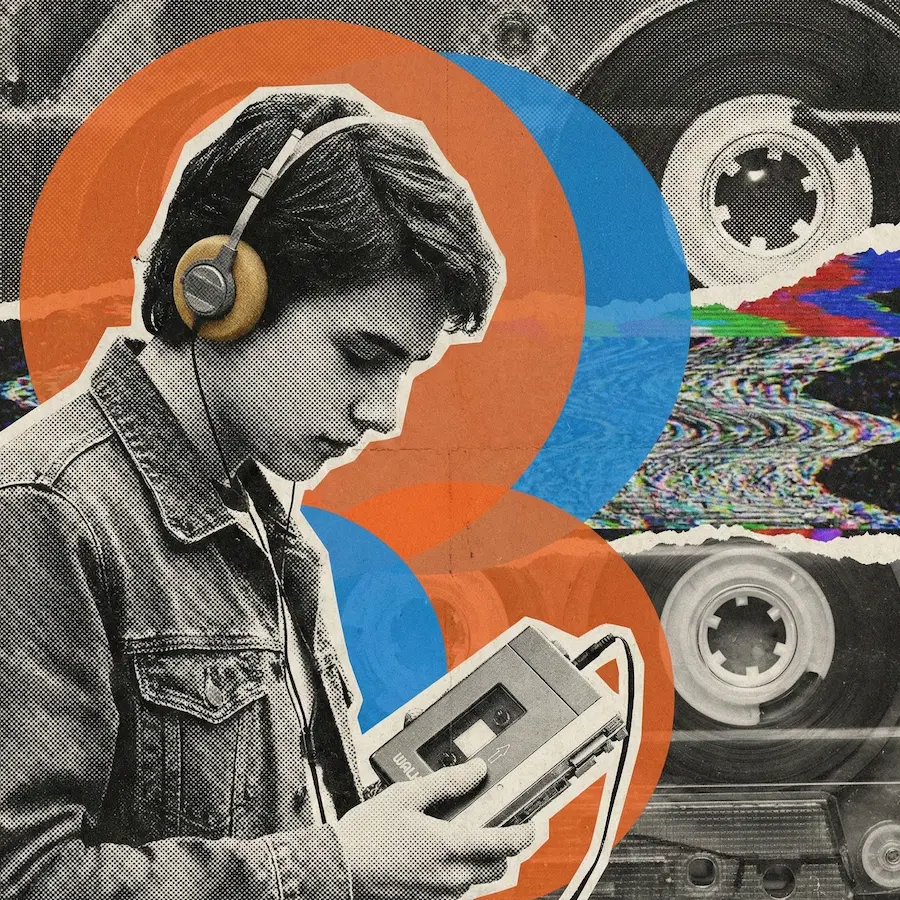

The $200 Walkman That Never Played a Single Tape
I watched a 19-year-old drop $200 on a vintage Sony Walkman at a Brooklyn flea market last weekend. She took photos of it from every angle, posted them to her story with “aesthetic vibes ✨,” and admitted she’d never owned a cassette tape. But that wasn’t the point. The Walkman wasn’t a music player; it was a time machine.
This is digital nostalgia at its core: buying memories we never actually had. Walk through any thrift store in Williamsburg or check out the trending sounds on TikTok, and you’ll see the pattern everywhere. Gen Z is buying film cameras they don’t know how to load, collecting VHS tapes they can’t play, and wearing band t-shirts for concerts that happened before they were born.
But this isn’t just teenage rebellion or hipster posturing. Something deeper is happening. We’re living through the “analog anxiety response.” A generation that grew up entirely digital is desperately reaching backward for tactile experiences that feel more “real” than their hyperconnected present.
When researchers at UC San Diego studied nostalgia patterns in digital natives, they found something fascinating: people aren’t just missing specific eras. They’re missing the idea of having fewer choices, slower communication, and zero surveillance. The past feels like a simpler operating system.

The Algorithm Behind Digital Nostalgia: Teaching Us Which Memories to Have
Digital nostalgia isn’t organic – it’s algorithmic. I’ve been tracking this shift across platforms for months, and the reality is stark: we’re not experiencing genuine collective memory. We’re experiencing collective algorithmic curation.
TikTok’s recommendation engine discovered that nostalgia content triggers massive engagement. Videos tagged with #Y2K outperform almost every other trend category. The platform doesn’t just show you nostalgic content; it teaches you which memories to have. It’s the same AI-driven curation that’s reshaping how we think applied to our emotional relationship with the past. A 16-year-old watching “aesthetic 90s room tours” isn’t remembering the 90s. They’re learning the script for them.
The same pattern shows up everywhere. Spotify’s “Time Capsule” playlists don’t just surface your old music; they create artificial memory anchors. Instagram’s “On This Day” feature teaches you which moments were worth remembering. Digital media researchers at MIT call this “algorithmic memory formation” – the process by which platforms shape not just what we see, but how we remember.
This explains why Gen Z’s nostalgia feels so specific and uniform. They’re not nostalgic for random past elements. They’re nostalgic for carefully curated past aesthetics that performed well in engagement metrics. The algorithm taught them to miss beige computers, dial-up sounds, and Nokia ringtones because these visuals keep users on the platform longer.

The Psychology: Escaping the Infinite Scroll
We didn’t start romanticizing flip phones by accident. The timing isn’t coincidental: Digital nostalgia surged precisely as digital anxiety peaked. Gen Z reports higher rates of social media fatigue, notification stress, and algorithmic overwhelm than any previous generation. The past offers a psychological off-ramp.
Consider what pre-smartphone life represented: finite entertainment options, delayed gratification, and privacy by default. You couldn’t endlessly scroll through content. You couldn’t constantly compare yourself to highlight reels. You couldn’t be reached 24/7. These limitations, which felt restrictive at the time, now seem like luxuries.

Behavioral psychologists at Stanford found that exposure to “analog nostalgia” content actually reduces cortisol levels in digital natives. Watching someone use a film camera or listening to vinyl crackle triggers a measurably calming response. It’s not the aesthetics themselves that soothe – it’s what they represent: intentionality, permanence, and scarcity.
The tactile aspect matters too. Digital interactions lack physical feedback. Tapping glass doesn’t satisfy the same way clicking mechanical keys or inserting cassettes does. While smart rings and invisible wearables promise seamless digital integration, the analog revival represents the opposite impulse: making technology more present, not less. The “analog revival” isn’t really about analog technology. It’s about reclaiming physical satisfaction in an increasingly dematerialized world.

How Brands Monetized Digital Nostalgia
Digital nostalgia isn’t just a cultural phenomenon; it’s an economic strategy. The “retro tech aesthetic” has become a billion-dollar market, and companies are mining our collective memory for product inspiration. Apple didn’t accidentally make their newest products feel like old iPods. Nintendo didn’t randomly decide to re-release classic games. McDonald’s didn’t coincidentally bring back 90s Happy Meal toys.
The nostalgia economy operates on a simple premise: emotional triggers drive purchasing decisions faster than rational features. Consumer behavior research at Northwestern confirms that nostalgic marketing increases purchase intent by up to 15% compared to standard advertising. A $300 Polaroid camera sells because it promises the feeling of authentic memory creation, not because it takes better photos than an iPhone. Record players outsell CD players not for audio quality, but for the ritual of intentional listening.
Streaming platforms understand this perfectly. Netflix doesn’t just license old shows; they specifically choose content that triggers nostalgic responses in their target demographics. “Stranger Things” wasn’t successful just because it’s a great show. It was successful because it perfectly synthesized 80s nostalgia triggers – the music, the technology, the family dynamics – into consumable content for audiences who missed that era.
Social media platforms have become the primary distribution mechanism for this strategy. Brands create “throwback” content that feels organic but is carefully designed to trigger purchasing impulses. The “vintage aesthetic” influencer category exists specifically to make consumption feel like cultural participation.

The Dark Side Of Nostalgia Culture
But digital nostalgia isn’t the warm hug it pretends to be. It edits reality. It crops out the anxiety, isolation, and exclusion that many people actually experienced during those “simpler times.” When we idealize the past, we risk distorting both memory and expectations for the future.
The most problematic aspect is selective memory. The “good old days” narrative conveniently forgets that pre-internet communication isolated people without local communities. It romanticizes slower information while ignoring that slower information often meant ignorance about important issues. Research from Pew shows that nostalgic political messaging often correlates with decreased support for addressing current challenges. It celebrates privacy while forgetting that privacy sometimes protected discrimination and abuse from accountability.
The commercial exploitation creates artificial scarcity and inflated values. Vintage items that were worthless five years ago now sell for hundreds of dollars because they trigger nostalgic responses. Young people spend significant money on obsolete technology that performs worse than free alternatives, simply because ownership feels culturally meaningful.
Most concerning is how digital nostalgia can prevent engagement with necessary change. If the past always looks better than the present, why work to improve current conditions? If vintage aesthetics feel more authentic than contemporary culture, why participate in creating new culture?

Finding Balance in the Digital Nostalgia Economy
Digital nostalgia isn’t inherently harmful, but it requires intentional engagement. The key is distinguishing between nostalgia as aesthetic appreciation versus nostalgia as escapism. Collecting vintage cameras because you appreciate their design? That’s cultural engagement. Believing that film photography is inherently more “real” than digital? That’s romanticization that might limit your creative possibilities.
The healthiest approach treats nostalgic culture as one input among many, not as the primary framework for understanding value or authenticity. Harvard Business Review research on mindful consumption shows that conscious engagement with nostalgic products leads to higher satisfaction than impulse nostalgic purchases. Vintage aesthetics can inform contemporary design without becoming the only acceptable aesthetic. Analog processes can supplement digital workflows without replacing them entirely.

Understanding the algorithmic nature of nostalgic curation also helps. When platforms surface nostalgic content, they’re not neutral. They’re choosing which past to remember and how to remember it. The same way AI personal stylists curate our fashion choices, algorithms curate our emotional relationships with memory.
The most valuable aspects of nostalgic culture are often the underlying principles rather than the specific technologies. The “analog revival” succeeds because it emphasizes intentionality, craftsmanship, and presence – values that can be applied to contemporary practices without requiring obsolete technology.
The bottom line: You don’t need a Walkman to find peace. You need intentionality. Use the past as inspiration, not an escape hatch.


Leave a Reply