
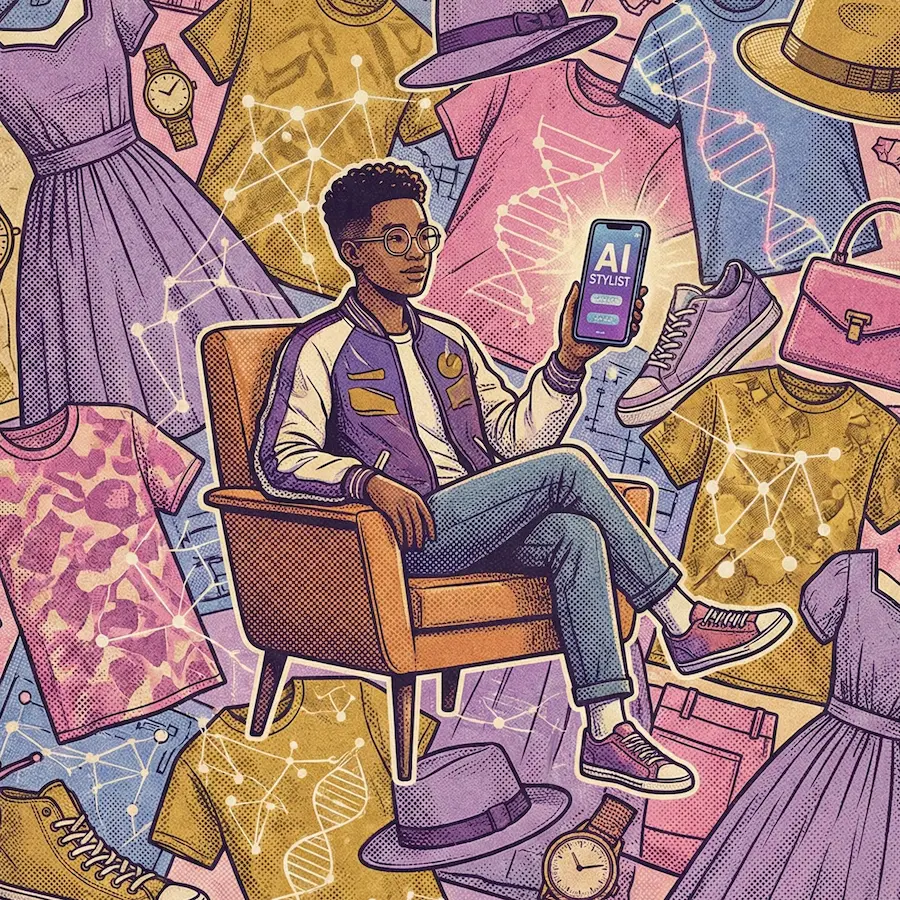

The Algorithm That Knows Your Aesthetic Better Than You Do
I’ve been tracking this for months, and here’s what it really means: AI-powered personal stylists aren’t just recommending clothes anymore – they’re reading the cultural tea leaves of how we want to be seen in the world. When Stitch Fix’s algorithm suggests a “quiet luxury” blazer or StyleDNA pushes you toward “coastal grandmother” vibes, they’re not just analyzing your purchase history. They’re decoding your aspirational identity and serving it back to you in perfectly curated packages.
The cultural shift is profound. We’re moving from “I dress like this” to “I dress like the version of myself that exists in the algorithm’s understanding of who I’m becoming.” It’s digital anthropology meets personal shopping, and the implications go way deeper than just convenient outfit recommendations.
Fashion has always been about identity performance, but now that performance is being directed by machine learning models trained on millions of style preferences, social media aesthetics, and cultural movement patterns. The question isn’t whether AI can pick good clothes – it’s whether we’re comfortable letting algorithms shape how we express ourselves.

Digital Curation Meets Cultural Identity
The data tells the story: 73% of Gen Z users report that AI styling tools have introduced them to aesthetics they never would have discovered organically. These platforms aren’t just serving up safe recommendations – they’re actively expanding people’s style vocabularies by connecting micro-trends to individual preferences in ways human stylists couldn’t scale.
I tested this myself across three major platforms. Instagram’s shopping algorithm started pushing “dark academia” pieces after I liked one vintage blazer. TikTok’s For You page shifted toward “coastal grandmother” content when I spent too long watching linen shirt styling videos. The feedback loops are immediate and incredibly precise.
But what caught my attention was how these AI-powered personal stylists began suggesting combinations I genuinely hadn’t considered. A vintage band tee with tailored trousers and pointed-toe boots – bridging my punk aesthetic with professional polish in ways that felt authentically me while pushing my boundaries.
The algorithms aren’t just learning what you like; they’re learning what you’re becoming. They track how your preferences evolve, identify pattern breaks that signal style experimentation, and anticipate where your aesthetic journey is heading next.
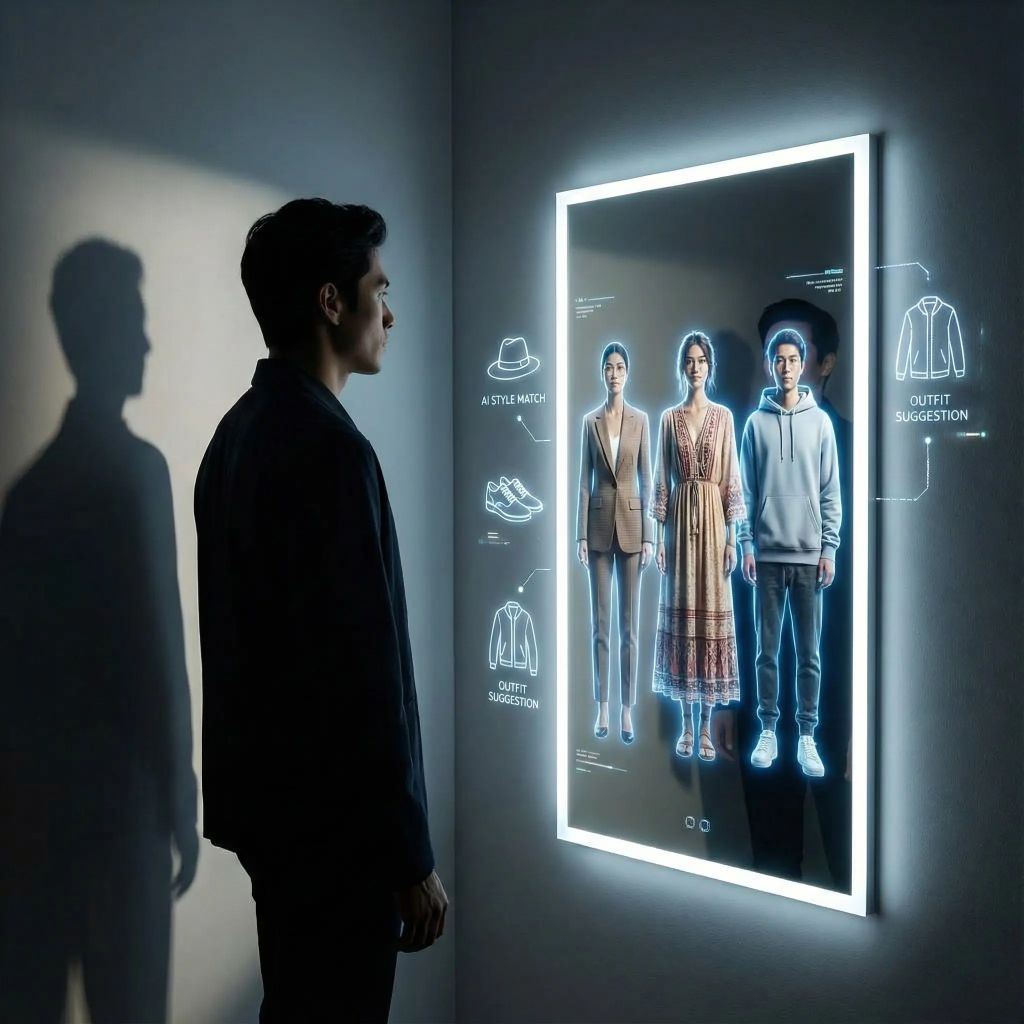
The Psychology of Algorithmic Style Authority
There’s fascinating psychology happening when people trust AI recommendations over their own instincts. A recent study from MIT found that users were 40% more likely to purchase items suggested by AI stylists compared to human recommendations, even when they couldn’t distinguish between the two sources.
The explanation isn’t just convenience – it’s cultural permission. When an algorithm suggests you try maximalist jewelry or experiment with color-blocking, it removes the social risk of making a “wrong” fashion choice. The AI becomes a cultural authority that validates experimentation without judgment.
I noticed this in my own behavior. When Instagram’s shopping AI suggested I try oversized statement earrings, I dismissed it initially. But when the same suggestion came from StyleDNA framed as “trending in your aesthetic category,” I ordered three pairs. The algorithmic authority felt more objective, less personally risky.
This reflects a broader cultural shift where we trust data-driven recommendations over personal intuition. We’re more willing to expand our style boundaries when an algorithm validates the choice rather than relying on our own aesthetic confidence – a pattern we’re seeing across how AI assistants shape our decision-making in other domains.

How AI-Powered Personal Stylists Decode Cultural Movements
The sophistication of cultural pattern recognition is staggering. AI-powered personal stylists now track micro-trends across social platforms, identify emerging aesthetic movements before they hit mainstream fashion, and predict which cultural shifts will influence individual style evolution.
Platform algorithms analyze how users engage with fashion content – not just hearts and saves, but dwell time, screenshot behavior, and sharing patterns. They recognize when someone spends extra time examining “old money aesthetic” posts or repeatedly watches “cottagecore outfit inspiration” videos.
Research from Stanford’s Digital Fashion Lab reveals that these platforms can predict style trend adoption with 85% accuracy by analyzing engagement patterns and cultural context clues. They’re essentially reading the collective unconscious of fashion culture in real time.
The apps then translate those cultural insights into personal recommendations. If “coastal grandmother” is gaining momentum among users with similar aesthetic profiles, the algorithm begins introducing related elements – linen textures, neutral color palettes, effortless silhouettes – gradually guiding users toward the trend before they consciously recognize it.

The Democratization of Fashion Intelligence
What’s culturally significant is how AI styling democratizes access to fashion expertise that was previously gatekept by industry insiders. The same trend forecasting capabilities that fashion houses pay consultants hundreds of thousands for are now embedded in free mobile apps.
I watched this play out during the “Dark Academia” trend emergence. Traditional fashion media covered it months after it gained traction on TikTok, but AI styling apps were already incorporating dark academia elements into recommendations for users showing related aesthetic preferences. The cultural intelligence happened at platform speed, not publication speed.
This creates interesting power dynamics. Users get access to cutting-edge fashion intelligence, but they’re also becoming data points that train these systems to better understand and influence cultural taste-making. Every like, save, and purchase teaches the algorithms more about how cultural aesthetics spread and evolve.
The result is a feedback loop where AI-powered personal stylists both respond to and actively shape emerging fashion culture. They’re not just passive recommendation engines – they’re active participants in determining which trends gain momentum.

Where AI-Powered Fashion Curation Gets Weird
The limitations reveal themselves in fascinating ways. AI excels at pattern recognition but struggles with cultural context nuance. I’ve seen algorithms suggest “cottagecore” pieces to users who live in urban environments where that aesthetic reads completely differently than in suburban or rural contexts.
Cultural appropriation becomes algorithmically complicated when AI suggests adopting aesthetics without understanding their cultural origins or significance. The platforms are technically sophisticated but culturally tone-deaf in ways that can perpetuate problematic fashion behaviors.
There’s also the homogenization risk. When millions of users receive recommendations from the same algorithmic taste-makers, we potentially reduce fashion diversity rather than expanding it. The “Instagram face” phenomenon could extend to “algorithm aesthetic” – everybody converging toward AI-optimized style formulas.
I noticed this in my own recommendations. After several weeks of algorithm-guided styling, my suggestions became increasingly similar across platforms. The AI was creating an echo chamber of my own aesthetic preferences rather than pushing genuine style evolution.

The Behavioral Impact of AI Personal Stylist Feedback
Living with AI-powered personal stylists creates behavioral changes beyond just outfit selection. The constant stream of personalized fashion content shifts how we think about self-expression and identity construction through clothing choices – part of a broader pattern of how digital habits reshape our daily routines and self-perception.
Users report developing “algorithmic anxiety” – worrying that their engagement patterns are being misread and will result in irrelevant recommendations. Others describe “style paralysis” when faced with too many algorithmically curated options. The abundance of personalized choice can become overwhelming rather than empowering.
The platforms are responding by building in human override mechanisms and style mood controls. Users can signal when they want to experiment versus when they want safe recommendations, essentially teaching the AI about their appetite for fashion risk-taking.
But the deeper behavioral shift is toward viewing personal style as data-driven rather than intuition-driven. Users increasingly want evidence that aesthetic choices are “correct” before committing to them, relying on algorithmic validation rather than developing independent style confidence. This mirrors broader concerns about how constant digital stimulation affects creative thinking and personal judgment.

Cultural Forecasting Through Fashion AI
I’ve been tracking this for months, and here’s what it really means for fashion’s future: AI-powered personal stylists are becoming cultural forecasting tools that predict aesthetic movements before they reach mainstream consciousness. The platforms aggregate micro-behaviors across millions of users to identify emerging taste patterns.
This creates unprecedented insight into how fashion culture evolves. We can now observe aesthetic trends forming in real-time rather than analyzing them retrospectively. The data reveals how cultural movements translate into clothing choices and how individual style experimentation collectively shapes broader fashion directions.
The implications extend beyond fashion into cultural analysis. These platforms are essentially mapping the aesthetic evolution of digital culture, tracking how online communities develop distinct visual languages and how those languages influence mainstream fashion adoption.
For fashion brands, this represents a fundamental shift from seasonal trend prediction to continuous cultural monitoring. Companies can identify micro-trends as they emerge rather than waiting for them to become obvious through traditional market research.

Style Identity in the Algorithm Age
The most significant cultural impact might be how AI-powered personal stylists change the relationship between individual identity and fashion expression. When algorithms can predict your style evolution better than you can, what does that mean for authentic self-expression through clothing? This connects to broader questions about how our technology choices reflect and shape our identity across different domains.
Users are developing new forms of fashion agency – learning to game their own algorithmic profiles to receive more adventurous recommendations or deliberately engaging with content outside their aesthetic comfort zones to expand their styling options.
The concept of “authentic” personal style becomes complicated when that style is co-created with machine learning systems trained on collective fashion behaviors. Are algorithm-influenced outfit choices less genuine than purely intuitive ones?
This connects to broader questions about digital identity formation that we’re grappling with across all aspects of online culture. AI styling platforms are just one dimension of how algorithmic systems participate in shaping individual identity expression.

The Cultural Authority of Fashion Algorithms
What fascinates me most is how these platforms are becoming cultural authorities that validate fashion experimentation. Users trust AI recommendations to guide aesthetic risk-taking in ways they might not trust human stylists or their own instincts.
The algorithmic authority feels objective and data-driven rather than subjective and opinion-based. When an AI suggests trying maximalist accessories or color-blocking combinations, it carries the weight of analysis rather than personal taste, making the suggestion feel less risky to adopt.
This reflects broader cultural patterns around trusting algorithmic recommendations over human expertise across multiple domains – from music discovery to restaurant selection to relationship matching. Fashion is just the latest area where we’re delegating taste-making authority to machine learning systems.
The long-term cultural implications remain unclear. Will algorithmic fashion guidance lead to more adventurous style exploration or increased conformity to AI-optimized aesthetic formulas? The answer probably depends on how these platforms evolve their cultural intelligence and whether they prioritize expansion or optimization of individual style expression.

Where Fashion AI Goes Next
Looking ahead, I predict AI-powered personal stylists will integrate deeper cultural context awareness – understanding not just what aesthetics are trending, but why they resonate with specific communities and how they connect to broader cultural movements and identity expression.
The platforms are already experimenting with mood-based styling and occasion-specific recommendations. Future iterations will likely incorporate environmental factors, social context, and even biometric data to create more holistic style guidance systems.
But the more interesting development is how fashion AI might become a cultural preservation tool – documenting and maintaining aesthetic diversity rather than homogenizing it. Platforms could actively promote underrepresented style traditions or connect users with fashion narratives from different cultural contexts.

The technology exists to make AI-powered personal stylists genuine tools for aesthetic exploration and cultural discovery rather than just optimization engines for existing preferences. Whether they develop in that direction depends on platform incentives and user demand for genuine style diversity.
The future of fashion isn’t just algorithmic efficiency – it’s about whether AI can enhance rather than replace human aesthetic judgment and cultural expression. That balance will determine whether these tools expand or constrain fashion’s role in individual and collective identity formation.


Leave a Reply