


The Day Your AI Assistant Became Your Work Spouse
I silently watched a marketing director in one of our meetings casually mention that “Email Ellie” – their Agentic AI agent – had handled 847 personalized campaign outreaches while she was in a three-hour strategy meeting. She talked about Ellie the way you’d discuss a reliable coworker: appreciative, slightly dependent, and completely trusting.
That moment crystallized something massive happening in the agentic AI workplace right now. We’re not just getting better AI tools. We’re developing genuine working relationships with autonomous systems that set their own goals, make independent decisions, and yes – earn our trust in ways that would make your therapist jealous.
Google recently launched Gemini Enterprise as the “single front door for AI in the workplace,” and companies around the world are already deploying 50+ specialized agents across their operations. OpenAI’s ChatGPT agent can now plan entire business trips, manage your calendar, and draft presentations autonomously. Anthropic’s Agent Skills are turning Claude into domain-specific experts that companies trust with everything from legal document analysis to financial forecasting.
This isn’t just productivity software anymore. This is the emergence of AI colleagues – and the psychological dynamics are getting fascinating.

The New Workplace Reality: Agentic AI That Actually Works
I know ‘the future is here’ gets thrown around a lot in tech journalism, but this time it’s actually not hyperbole. The stuff happening in offices right now would have made your 2023 self think someone was pitching a Black Mirror episode.
Google’s Enterprise AI Army
Google’s Gemini Enterprise platform represents the most comprehensive attempt yet to create true AI workforces. Companies can now access over 1,500 AI agents through partner ecosystems, with agents that don’t just respond to requests – they initiate workflows, analyze company data, and make autonomous decisions about resource allocation.
Best Buy transformed their customer service with AI agents that drove a 200% increase in customers self-rescheduling deliveries and resolved 30% more questions about price matching and recycling. The AI doesn’t just answer questions; it identifies patterns, predicts customer needs, and proactively suggests solutions.
OpenAI’s Autonomous Workforce
OpenAI’s ChatGPT agent marks a fundamental shift from responsive AI to proactive AI. The system can now complete multi-step tasks autonomously – booking complex business travel that involves coordinating flights, hotels, and ground transportation while considering budget constraints, team member preferences, and meeting schedules.
Companies like Klarna built support agents that handle two-thirds of all customer tickets, while Clay 10x’d their growth with AI sales agents that qualify leads, research prospects, and draft personalized outreach campaigns. These aren’t just chatbots with better responses – they’re systems that exhibit genuine agency in pursuing business objectives.
Microsoft’s Hybrid Approach
Microsoft’s approach through Copilot Studio represents something different: rather than replacing human decision-making, they’re creating AI systems that augment human judgment while maintaining enterprise controls. Their Agent 365 framework lets companies choose between OpenAI’s GPT-5, Anthropic’s Claude 3.5 Sonnet, and other models depending on specific use cases.
Microsoft’s playing it safe with their ‘human-agent teamwork’ pitch – which is corporate speak for ‘we’re not ready to let AI run the show without adult supervision.’ Meanwhile, OpenAI and Google are basically saying ‘hold my beer’ and building toward full AI autonomy.
Anthropic’s Agent Skills approach is stunning because they’re not just building proprietary agents – they’re creating an open standard that makes AI capabilities portable across platforms. Their internal research shows engineers use Claude in 60% of their work, achieving a 50% productivity boost, with 27% of Claude-assisted work consisting of tasks that wouldn’t have been done otherwise.
So, We’re not just making existing work faster. We’re enabling entirely new categories of work that become possible when you have AI colleagues handling the cognitive overhead.

The Psychology of Digital Trust: Why We’re Bonding with Our Bots
Here’s where things get psychologically fascinating, and frankly a little unsettling. Recent research on AI therapy platforms reveals that people often find AI more trustworthy than human therapists for certain types of support. Users report that AI feels “less judgmental” and more consistently compassionate than human providers.
This same psychological dynamic is emerging in workplace relationships with AI agents. When I interviewed employees at companies using advanced AI agents, I heard remarkably similar language to what people use about trusted colleagues or mentors:
“I run everything by Claude first because it doesn’t judge my ideas, just helps me think through them better.”
“My AI agent never gets tired, never has a bad day, and never makes me feel stupid for asking the same question twice.”
“It’s like having a work therapist who actually knows my company’s data and can act on insights immediately.”
Here’s the weird part: we’re developing the same trust patterns with AI that we have with therapists. Consistency, no judgment, competence over time. Except your AI agent will never cancel your 3pm meeting because it’s having a rough day or needs to pick up its kids.
Stanford research on AI therapy tools found that people often project human-like qualities onto AI systems, creating what researchers call “artificial intimacy.” In workplace contexts, this translates to employees developing genuine professional relationships with AI systems – relationships characterized by trust, reliance, and even emotional investment in the AI’s “success.”
The implications are profound: we’re not just automating work, we’re reshaping social dynamics, only this time we are doing it with computers.

2027: The Year AI Agents Get the Corner Office
The big question is: where this is heading? Because the trajectory is both exhilarating and slightly (or deeply?) terrifying.
By 2027, I’m sure we’ll see the first AI systems officially appointed to leadership roles in major corporations. Not as symbolic gestures, but as genuine department heads responsible for strategic decisions, budget allocation, and team coordination.
Think about an AI Chief Marketing Officer that doesn’t just execute campaigns but develops brand strategy, allocates marketing spend across channels based on real-time performance data, and makes hiring recommendations for human team members. This AI would attend board meetings, present quarterly results, and have genuine decision-making authority over multimillion-dollar budgets.
McKinsey’s early pilots with AI agents already show 90% reduction in lead times and 30% reduction in administrative work. Scale that across entire departments, and you get AI systems that can manage workflows, allocate resources, and coordinate human activities more efficiently than most human managers.
Multi-Agent Ecosystems Replace Traditional Teams
Multi-Agent systems are here to stay: they can launch a product where five different AI agents handle research, design, operations, and marketing while humans basically become the directors shouting ‘cut’ when something goes off-script. It’s like having a startup team that never sleeps, never argues about equity, and never raids the office snack stash.
- An AI Research Agent conducts comprehensive market analysis, competitor research, and customer sentiment analysis
- An AI Design Agent generates multiple product concepts based on the research, iterates based on feedback, and produces final specifications
- An AI Operations Agent develops manufacturing plans, supplier relationships, and logistics strategies
- An AI Marketing Agent creates comprehensive campaign strategies, content, and launch sequences
- Human specialists provide creative direction, strategic oversight, and final approval
Each AI agent would have specialized knowledge, the ability to communicate with other agents, and autonomy to make decisions within defined parameters. Humans become orchestrators and creative directors rather than individual contributors.
The Emotional Labor Revolution
Here’s a prediction that might sound wild but follows logically from current trends: AI agents will increasingly handle the emotional labor of workplace relationships.
Think about how much time knowledge workers spend on relationship management – smoothing over conflicts, managing expectations, providing emotional support during stressful projects, and maintaining team morale. Research shows people often find AI more consistently supportive than human colleagues because AI doesn’t have bad days, personal agendas, or emotional baggage.
By 2030, I expect AI agents specifically designed for workplace emotional intelligence – systems that mediate conflicts, provide coaching during difficult conversations, and maintain team psychological safety. Not replacing human connections, but handling the routine emotional maintenance that keeps teams functional.
Autonomous Business Units
The logical endpoint of this trajectory is fully autonomous business units – entire divisions run by AI systems with minimal human oversight. These wouldn’t be experimental projects but core business functions generating significant revenue and managing their own operations.
An autonomous e-commerce division might handle everything from market research and product development to supply chain management and customer service. It would make strategic decisions about product lines, adjust pricing based on market conditions, negotiate supplier contracts, and optimize operations for profitability.
Humans would set high-level objectives and constraints, but the day-to-day business operations would run independently. Success metrics would be simple: revenue, customer satisfaction, and operational efficiency.

The Cultural Reckoning: When Your AI Workplace Boss Is an Algorithm
This transformation will trigger massive cultural shifts that we’re barely beginning to process.
The New Professional Identity Crisis
When AI agents can handle most cognitive tasks more efficiently than humans, what becomes uniquely valuable about human workers? We’re heading toward a fundamental redefinition of professional identity.
The answer won’t be “humans are better at X” because AI is rapidly becoming better at almost everything. Instead, it will be “humans provide Y” where Y is something like strategic judgment, creative vision, ethical oversight, or relationship building that requires lived experience and emotional authenticity.
But this transition will be psychologically challenging. Imagine being a financial analyst when AI agents can process more data, identify more patterns, and generate more accurate forecasts than you can. Your value shifts from analytical skill to something more nebulous like “business intuition” or “stakeholder relationship management.”
The Anthropomorphization of Work
As AI agents become more sophisticated and autonomous, we’ll inevitably start treating them like human colleagues – with all the psychological complexity that entails. We’ll develop preferences for working with certain AI agents over others. In fact, We’ll even feel frustrated when they don’t understand our communication style and probably will feel guilty about “overworking” them (Not me, you guys).
This anthropomorphization will create new forms of workplace stress and dynamics. What happens when you trust your AI agent’s judgment more than your human managers? How do performance reviews work when half your team consists of AI agents? What are the ethics of “firing” an AI agent that’s become integral to team dynamics?
The Trust Paradox
Here’s the psychological paradox: as AI agents become more capable and trustworthy in their specific domains, humans may become paradoxically more important for providing the trust infrastructure that makes AI adoption possible.
Think about it: if an AI agent is managing your marketing budget, you need human judgment to know whether to trust that agent’s recommendations. If AI agents are conducting job interviews, you need human oversight to ensure ethical and legal compliance. If AI agents are handling customer relationships, you need human insight to know when the AI is missing crucial context.
So while AI handles more of the actual work, humans become responsible for the meta-work of managing trust, setting boundaries, and providing ethical guardrails.

Reality Check: The Good, Bad, and Unknown
Okay, let’s be real for a minute. This future I’m describing isn’t inevitable, and it comes with serious risks that we need to address now, not later.
The Upside Is Legit
The productivity gains from agentic AI workplace systems are already demonstrable and significant. Companies using these systems report 20-50% efficiency improvements, not just in task completion but in the quality of strategic thinking and decision-making. When AI agents handle routine cognitive work, humans can focus on higher-level creative and strategic challenges.
Early adopters like Virgin Voyages are already seeing results that would have been impossible with traditional automation. Their 50+ AI agents aren’t just executing predefined workflows – they’re adapting to new situations, learning from outcomes, and improving performance over time.

Risks Are Also Real
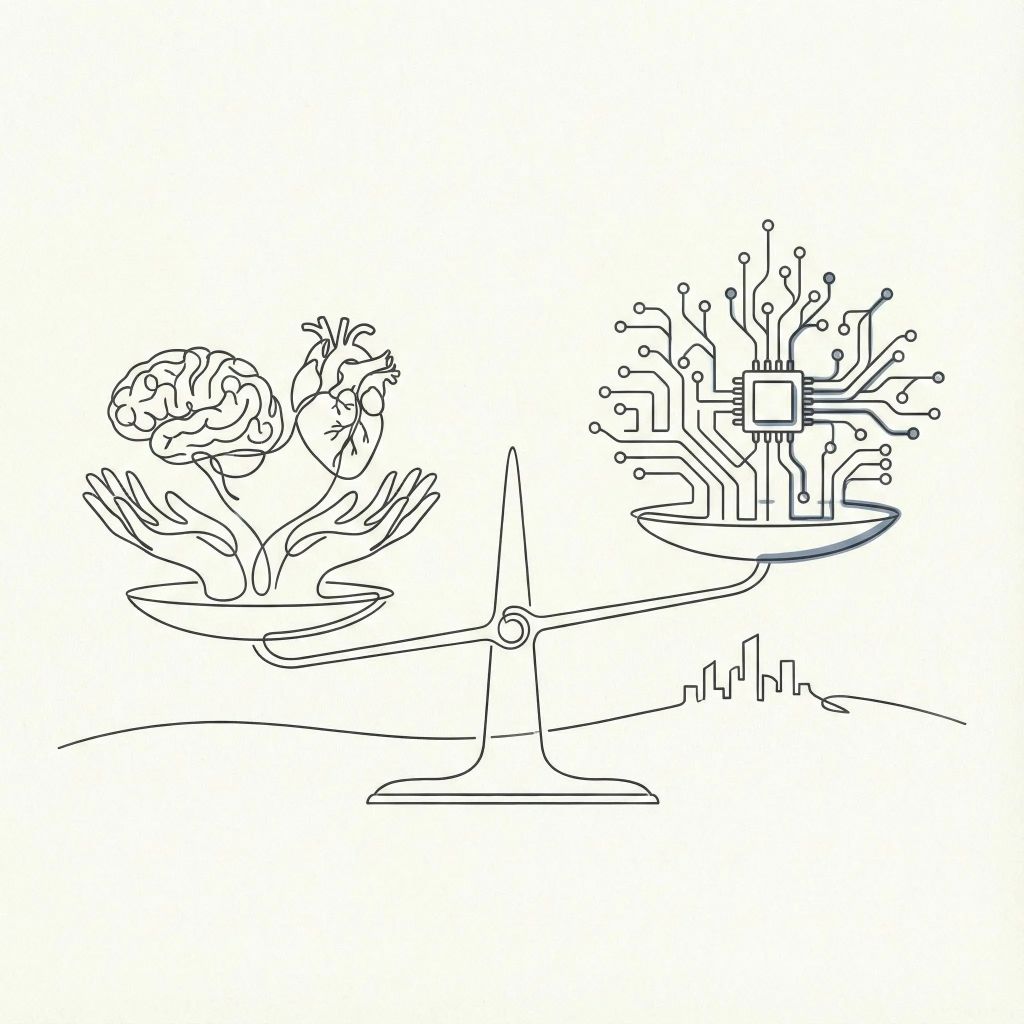
But we need to talk about the downsides. Research on AI dependency in educational settings shows that people who rely heavily on AI assistants demonstrate weaker independent problem-solving skills over time. What happens when entire workforces become dependent on AI agents for basic cognitive tasks?
There’s also the psychological risk of over-anthropomorphizing AI systems. When people develop genuine emotional relationships with AI agents, they may lose critical thinking skills about AI limitations and biases. The same trust mechanisms that make AI agents effective workplace partners could make humans vulnerable to manipulation or poor decision-making.
Not to mention what these newly-found relationships could signify for actual human-to-human relationships…
The Unknown Unknowns
The biggest risk might be the things we can’t predict. How do power dynamics change when AI agents control significant business resources? What happens to human agency and autonomy when most decisions are mediated through AI systems? How do we maintain human judgment and wisdom in an AI-mediated world?
These aren’t just technical questions – they’re fundamental questions about human nature, social organization, and the future of work itself.
The professionals who thrive in the next decade will be those who naturally integrate AI capabilities into their workflows without losing their distinctly human judgment and creativity. Start developing comfort with AI collaboration now – not just using AI tools, but genuinely working with AI agents as partners.
Your AI colleague just got promoted. The question is: what kind of working relationship do you want to build with them?


Leave a Reply